Trading vs Investing: What's the Real Difference (and Which Is Right for You)?
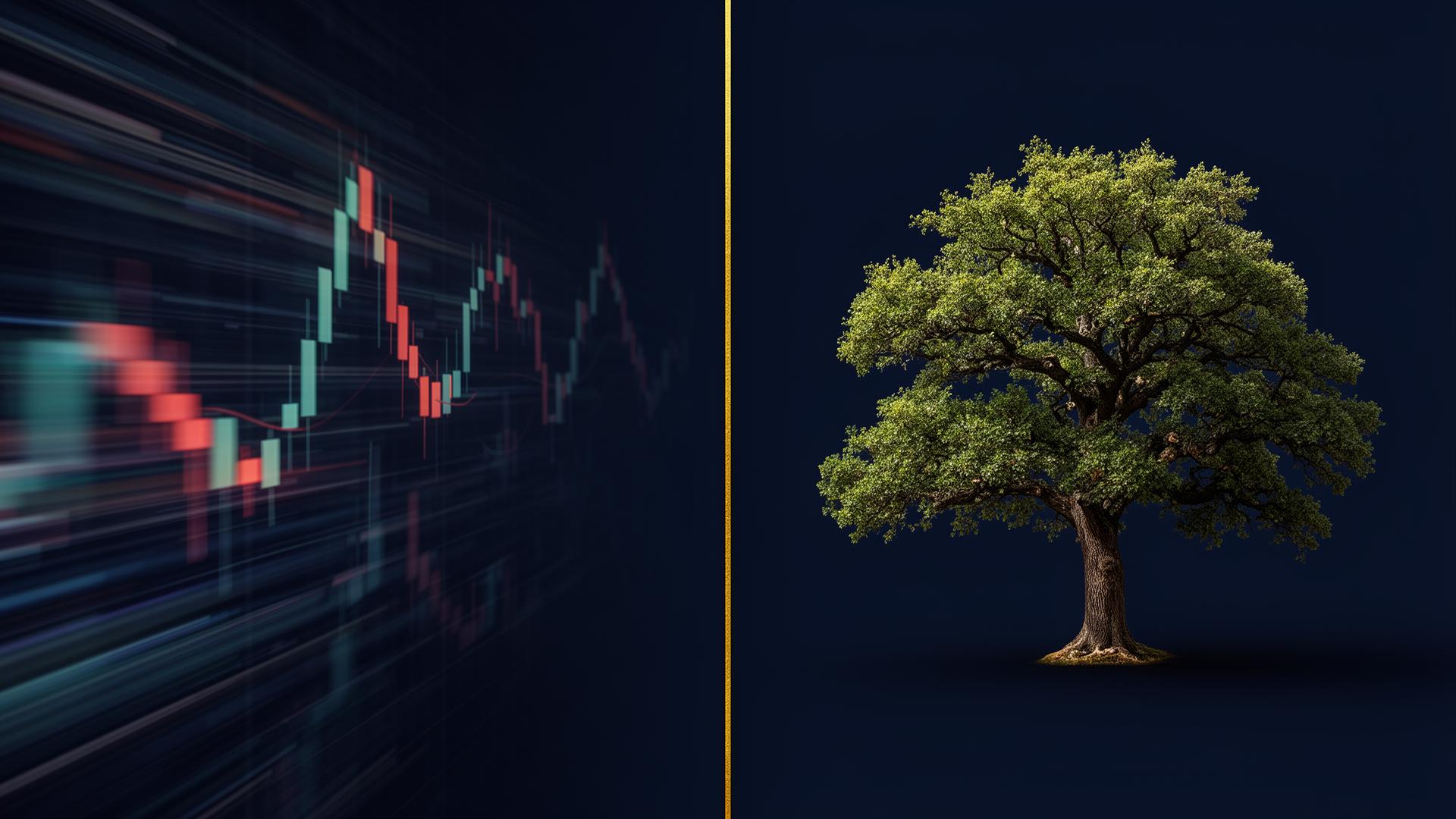
Most people use the words "trading" and "investing" interchangeably. They are not the same activity, and confusing them is one of the most common reasons new market participants lose money. One is a long-horizon wealth-building approach. The other is an active skill-based profession. Knowing which one fits your life, your capital, and your temperament is the single most important decision you will make before you place your first order.
This guide walks you through the real difference, who each path suits, the time and money each demands, and how to choose without guessing.
The simple definition
Investing is the practice of buying assets — shares, ETFs, property, bonds — and holding them for years or decades. You are betting on the long-term growth of a business, an economy, or an asset class. Returns come from price appreciation and dividends, compounded over time.
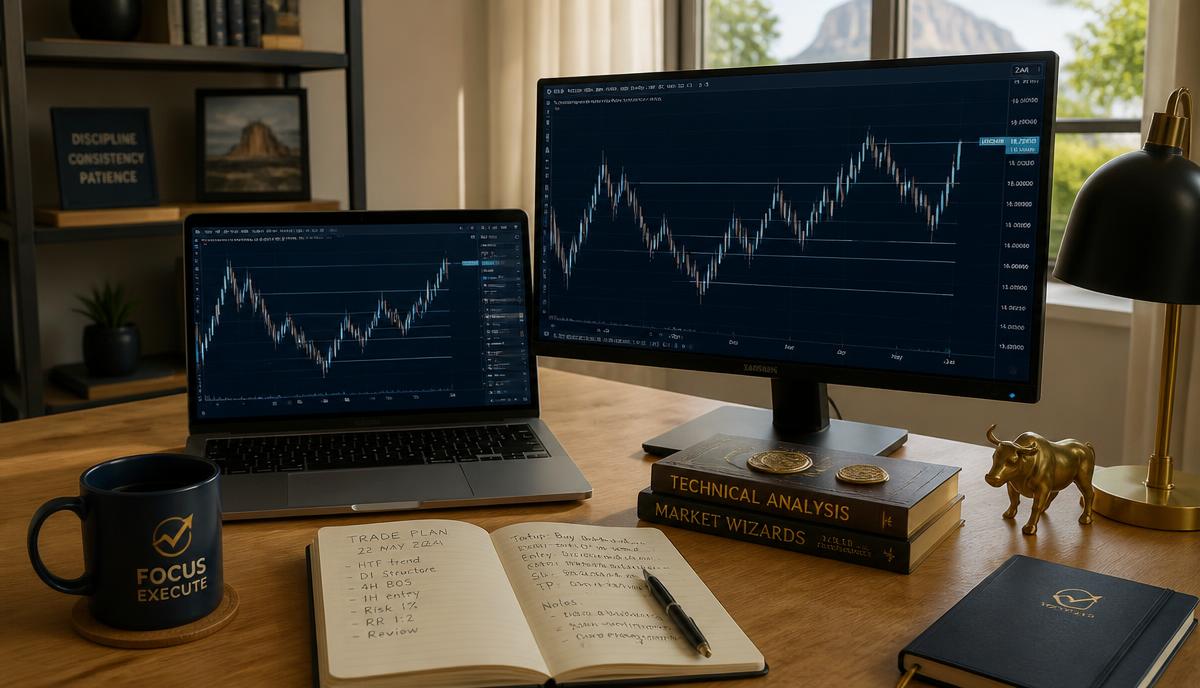
Trading is the practice of buying and selling financial instruments — forex pairs, indices, commodities, crypto, individual shares — over shorter timeframes (minutes, hours, days, or a few weeks) to profit from price movement in either direction. Returns come from skill in reading the market and disciplined risk management.
Same markets, in some cases. Completely different mindset, skillset, and time commitment.
Side-by-side comparison
| Factor | Investing | Trading |
|---|---|---|
| Time horizon | 5–30+ years | Minutes to weeks |
| Time commitment | A few hours a year | A few hours a day or week |
| Primary skill | Patience and asset selection | Execution, risk management, discipline |
| Income type | Long-term capital growth, dividends | Active cash flow |
| Capital needed to start | As little as the price of one ETF unit | A small funded account or a prop firm pass |
| Direction of profit | Only when prices rise | Rising and falling markets |
| Emotional pressure | Low day-to-day | High — must be managed |
| Learning curve | Shallow | Steep |
| Tax treatment | Often capital-gains rates | Often taxed as income (jurisdiction-dependent) |
Neither is "better." They serve different goals.
Who investing suits
You are likely an investor if:
- You want your money to grow quietly in the background
- You have a full-time career and no appetite to monitor charts
- Your horizon is retirement, your children's education, or a 10+ year goal
- You are comfortable with years of patience and the occasional drawdown
- You want simplicity over engagement
A diversified portfolio of low-cost index funds, held for decades, has historically been one of the most reliable wealth-building strategies ever measured. It is also one of the most boring — which is precisely why it works.
Who trading suits
You are likely suited to trading if:
- You want active income, not just long-term growth
- You are willing to treat it as a profession and train accordingly
- You can stomach losing trades without panicking
- You have the discipline to follow a system you did not invent on day one
- You want a skill that travels with you and is not tied to a single employer
Trading is closer to learning to fly a plane than buying a savings product. It is a skill. Skills take structured training, repetition, and feedback. Anyone telling you otherwise is selling you something.
"Before Stock Market College, I was making emotional decisions that cost me money. Now I have a clear structure and my first profitable quarter." — Michael Thompson, Day Trader, London 🇬🇧 ⭐⭐⭐⭐⭐ Verified
The hybrid path most people actually take
For the majority of our 70,000+ students since 2002, the answer has not been "either/or." It has been both.
A typical wealth plan looks like this:
- Build an investing core — index funds, retirement contributions, property — that grows passively in the background
- Develop a trading skillset in parallel to generate active income, which can then be redirected into the investing core
Trading without an investing foundation is fragile. Investing without active income takes decades to compound meaningfully. Combined, they reinforce each other.
Capital, time and risk — what is actually realistic
This is where most beginners get the math wrong.
- Investing can start with the equivalent of a few hundred currency units in an ETF. The hard part is keeping it there for 20 years without panic-selling during downturns.
- Trading does not technically require huge capital — you can demo trade for free and live trade with a small account or a funded prop firm account. The hard part is the months of structured learning before you risk anything meaningful. Read How Much Money Do You Need to Start Trading? for the realistic numbers. If you are specifically considering forex, see How Much Money Do You Actually Need to Start Forex Trading? for the exact starting capital.
In both cases, the bottleneck is rarely money. It is patience for investors and discipline for traders.
A note on tax (South African readers)
Local context matters, so for South African residents specifically: SARS generally treats long-term share gains as capital gains (inclusion rate applies), while frequent trading profits are typically taxed as ordinary income. This can materially change your net return. Always confirm with a registered tax practitioner before assuming which bucket your activity falls into. Readers in other jurisdictions should consult their local rules.
How to actually choose
Ask yourself, honestly:
- Do I want to own something for the long run, or do I want to trade market movement?
- How many hours per week can I genuinely commit to learning and executing?
- Am I doing this for retirement, side income, or a full career change?
- How would I react if my account dropped 15% next month?
If you are still unsure, the fastest way to find your honest answer is our free diagnostic: Find Your Level. It maps where you are now to the path most likely to fit.
Frequently asked questions
Can I do both at the same time? Yes — and most successful market participants do. Just keep the capital separate so a bad trading month never touches your long-term investments.
Is trading just gambling? Without a system, yes. With a tested strategy, defined risk per trade, and a written plan, it is a probabilistic profession — closer to running a small business than to a casino.
Which is more profitable? Over a lifetime, disciplined investing reliably builds wealth. Skilled trading can outperform in any given year but carries far higher variance. Skill, not the activity itself, drives the outcome.
How long before trading replaces a salary? Realistically, 18–36 months of consistent structured training for most people. See our realistic learning timeline for the honest version.
Should I quit my job to trade full time? No. Build the skill on the side, prove consistency for at least six months, and only then consider the transition.
The next step
Whichever path fits, the worst move is staying stuck in indecision. If you suspect trading is your route but are not sure where to start, the Prop Firm Challenge Survival Guide is a free 15-minute diagnostic that tells you exactly where you stand and what to fix before risking real capital.
The market does not reward research alone. It rewards a clear decision, followed by structured action.
Ready to commit? Compare our courses to find the programme that matches your capital, time, and goals.