How Long Does It Really Take to Learn Trading? A Realistic Timeline
"How long until I can trade for a living?" is the second-most-asked question after "how much money do I need?" The answer most newcomers want to hear is six months. The answer they actually need to hear is longer, and a lot more nuanced.
This is the honest timeline — phase by phase — for what it really takes to become a consistently profitable trader. It is built from the patterns we have seen across 70,000+ students since 2002, and it will save you years if you take it seriously.
The six-month fantasy
Social media has convinced an entire generation that trading is a six-month side-hustle. Buy a course, watch some videos, fund a prop firm, quit your job by Christmas. The reality: the people you see celebrating online either had years of preparation off-camera, or they are about to give the money back. Survivorship bias is brutal in this industry.
Real skill acquisition in any high-stakes field — surgery, aviation, professional sport — takes years of deliberate practice. Trading is no different. The good news: structured learning with proper feedback can compress the timeline dramatically. The bad news: nothing skips the stages entirely.
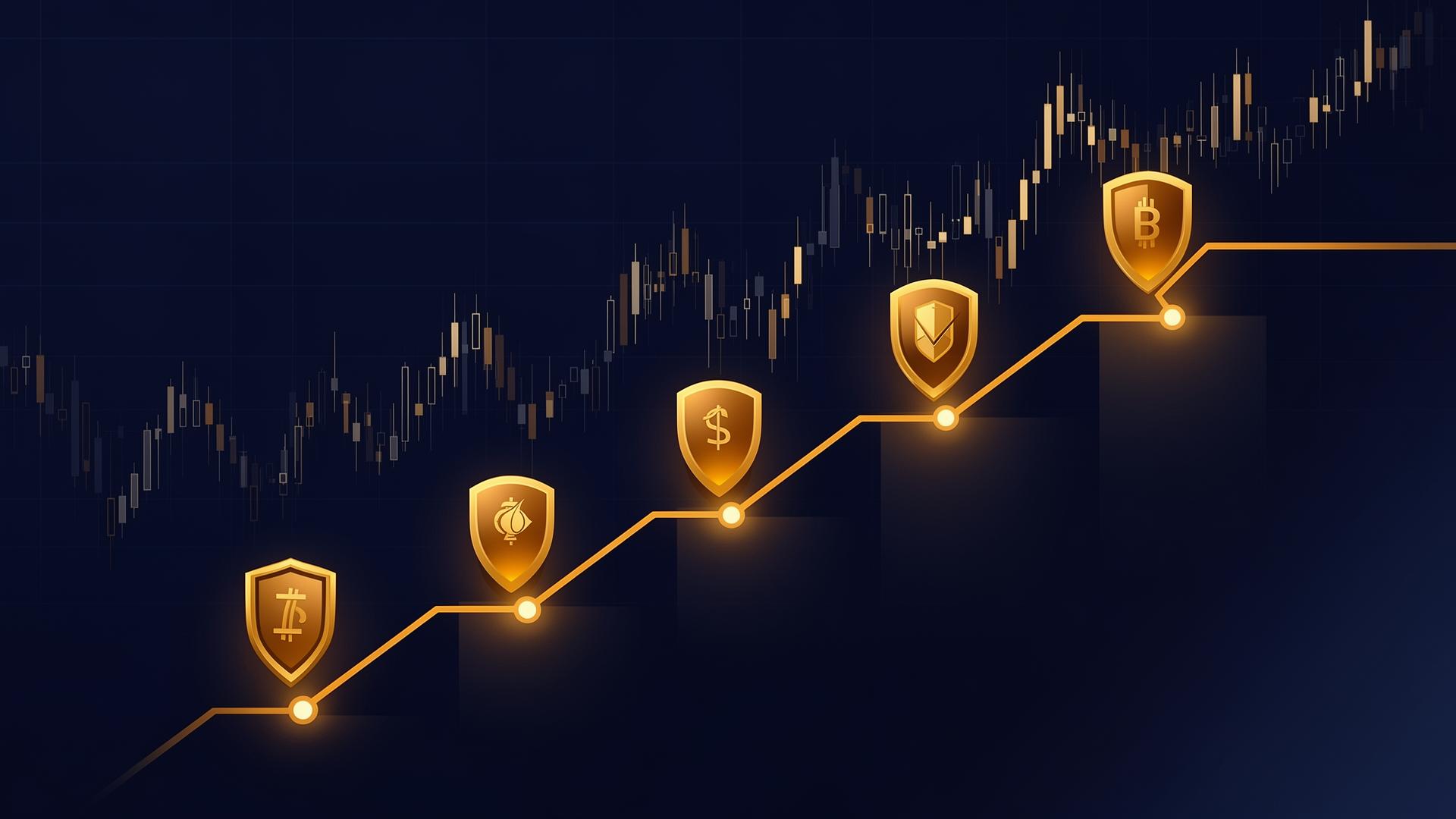
The realistic phase map
| Phase | Typical duration | What is happening | What to avoid |
|---|---|---|---|
| 1. Foundation | 0 – 3 months | Vocabulary, instruments, platforms, basic chart reading | Risking real money |
| 2. Mechanics | 3 – 6 months | Order types, position sizing, stop placement, journaling | Strategy-hopping |
| 3. Strategy | 6 – 12 months | One tested edge, traded with discipline | Adding indicators to mask losses |
| 4. Discipline | 12 – 18 months | Following the plan when it hurts, sitting on hands | Revenge trading after losses |
| 5. Consistency | 18 – 24 months | Stable monthly outcomes, positive expectancy | Increasing risk too fast |
| 6. Mastery | 24+ months | Scaling, multiple setups, professional psychology | Complacency |
These are typical durations for committed students. Faster is possible with daily focused practice and structured mentorship. Slower is the norm for self-taught traders working in isolation.
Phase 1 — Foundation (months 0–3)
You are learning the language. What is a pip, a lot, a spread, a margin call. The difference between forex, indices, commodities, crypto. How a candlestick chart actually works. How brokers and prop firms are structured. This phase should happen entirely on a demo account. Risking real money here is just paying tuition to the market.
Milestone to clear: you can explain to a friend, without notes, the difference between a long and short trade, what a stop loss does, and why position sizing matters.
Phase 2 — Mechanics (months 3–6)
You move to a tiny live account or a structured demo with realistic execution. You learn to place orders quickly, manage active positions, set stops mechanically, and journal every trade. You will lose money. That is the tuition, and it is cheap at this stage.
Milestone to clear: 30 consecutive trades placed and journaled in line with a written plan — regardless of profit.
"The progression system makes sense. Each course builds on the previous one, and I finally understand why my old strategies weren't working." — Francois Kotze, SMC Affiliate, South Africa 🇿🇦 ⭐⭐⭐⭐⭐ Verified
Phase 3 — Strategy (months 6–12)
You pick ONE setup — a single, well-defined edge — and trade it exclusively for at least 100 trades. This is the phase where almost everyone fails, because they cannot sit through a losing streak without bolting to a new strategy. The graveyard of trading careers is full of brilliant strategies that worked, abandoned after eight losing trades in a row.
Milestone to clear: a 100-trade sample of one setup with a positive expectancy, properly journaled.
Phase 4 — Discipline (months 12–18)
You know what to do. The challenge is making yourself do it when fear and greed are screaming the opposite. This is the phase that separates traders from gamblers. You will revenge trade. You will oversize. You will skip your plan once or twice and either pay for it or — worse — get away with it.
This is where peer feedback and live coaching become disproportionately valuable. A weekly live session with traders going through the same battle compresses years of solo learning into months.
"Attending weekly has become non-negotiable. The feedback loop accelerates everything. I wish I started earlier." — Thabo Sithole, Consistency Trader, Cape Town 🇿🇦 ⭐⭐⭐⭐⭐ Verified
Phase 5 — Consistency (months 18–24)
Your equity curve smooths out. Monthly outcomes become predictable within a range. You can string together three profitable months. You start passing prop firm challenges on first or second attempt because the rules now match how you already trade. You begin to think about scaling.
Milestone to clear: six consecutive months of positive expectancy, with drawdowns staying within your written risk parameters.
Phase 6 — Mastery (24+ months)
You add complementary setups. You scale position sizes. You explore additional instruments or sessions. The skill is now portable and durable — the kind of skill that survives broker failures, regulatory changes, and market regime shifts. This is the stage where trading reliably contributes to wealth, and where some choose to make it their primary career.
What actually accelerates the timeline
These are the levers that compress months into weeks:
- Structured curriculum — knowing what to learn in what order, instead of randomly consuming content
- Live trading events with feedback — weekly sessions where you see real execution and real corrections in real time, not edited videos
- A single mentor or community, not five — conflicting frameworks slow you down more than no framework
- A journal you actually review — writing it is 30% of the value, reviewing it weekly is the other 70%
- Trading smaller for longer — paradoxically, the people who stay small longest scale fastest
- Honest self-assessment — tools like the Find Your Level diagnostic and the Prop Firm Challenge Survival Guide help you see what you cannot see about your own gaps
What dramatically slows the timeline
- Jumping strategies every time you have a losing streak
- Trading without a written plan
- Oversizing positions to "make back" losses
- Learning from free social-media content with no structure
- Never journaling — or journaling but never reviewing
- Trying to scale before consistency is proven
Frequently asked questions
Can I learn faster than this? Yes, with full-time commitment, structured curriculum, and live mentorship. But the minimum phases cannot be skipped — they can only be compressed.
Why do some people claim they did it in 6 months? Often they had prior market exposure, an aptitude for probabilistic thinking, or — most commonly — they are talking about a single profitable streak, not durable consistency.
Do I need to quit my job? No, and you should not. The best learning trajectory is part-time training alongside stable income, transitioning to full-time only after Phase 5 is reached.
How much money will I lose during learning? If you keep size small and respect risk, your learning losses can stay between $100 and $600 in total before you reach consistency. If you size up to "speed things up," your tuition will run into thousands.
Is there a shortcut through a prop firm? A prop firm gives you capital, not skill. You still need the underlying phases — the challenge simply lets you scale once you have them.
The next step
Find your phase — see where you actually are today. Take five minutes for an honest self-assessment with Find Your Level, then move to Compare Courses to see which programme suits the phase you are in.
Mastery is built, not downloaded. But built on the right path, the timeline is shorter than you think.
For a breakdown of what trading courses actually cost across each price band, see What Does a Trading Course Cost in South Africa?.