Why Most Beginner Traders Blow Their First Trading Account

Most new traders do not lose money because the markets are unbeatable. They lose money because they make the same four or five mistakes in their first few weeks, and they make them with real capital before they have built the habits that protect that capital.
If you have already blown an account — or you are about to fund your first one — this article is the honest version of what actually goes wrong, and what to do instead.
1. Trading Too Large for the Account
The single most common reason a beginner account is wiped out is position size. A new trader opens a 200 USD account, takes a 0.50 lot trade on EURUSD, and a normal 30 pip move against them wipes out 150 USD before they have had time to react.
A professional trader risks a small, fixed percentage of the account per trade — typically 0.5% to 1%. On a 200 USD account, that is 1 to 2 USD of risk per trade. It feels too small to matter. That is exactly the point. Small risk per trade is what keeps you in the game long enough to learn.
2. Trading Without a Real Stop-Loss Strategy
A stop-loss is not "the place where I get out if it goes wrong". It is a structural part of the trade. Where you place your stop defines your risk, your position size, and your reward-to-risk ratio.
Beginners typically do one of two things wrong:
- They place the stop too tight, so normal market noise takes them out before the trade has a chance to work.
- They move the stop further away when price goes against them, turning a small planned loss into a large unplanned one.
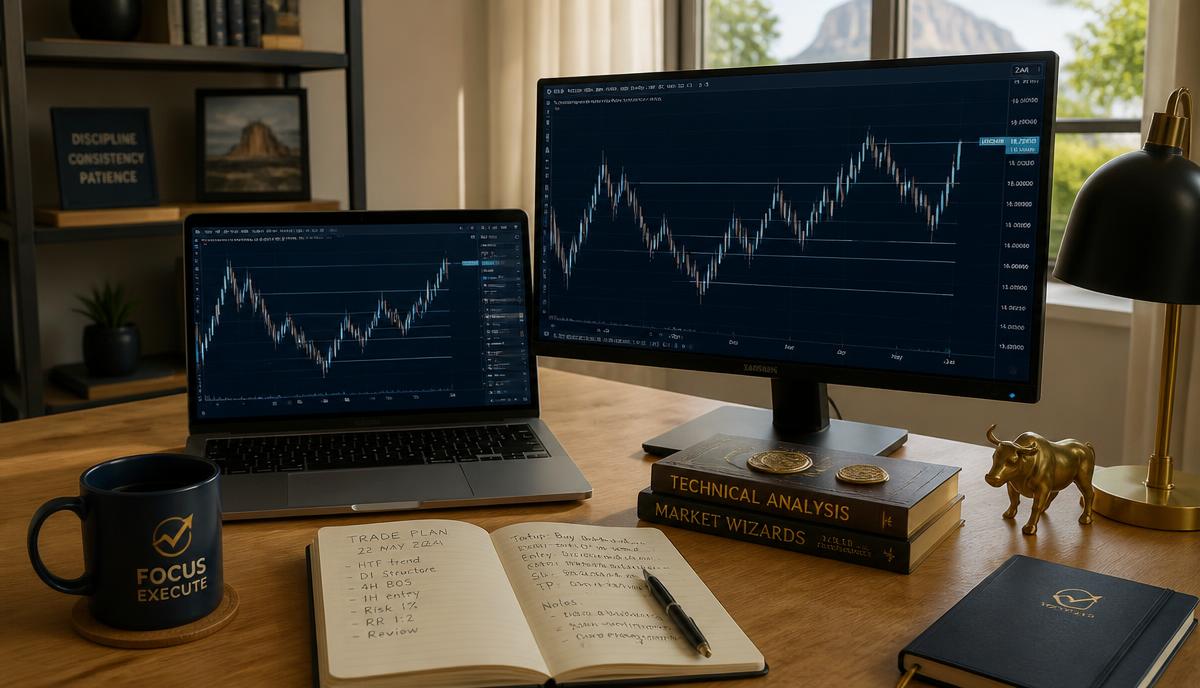
Both habits come from trading without a written plan — the same gap that catches people trading from home without a plan. A trader who has decided in advance where the stop goes and why, almost never moves it in the middle of a trade.
3. Overtrading
Overtrading is when you take trades that do not meet your criteria because you feel like you should be doing something. It is one of the fastest ways to bleed an account dry, and it almost always increases after a winning trade or after a loss.
Two simple rules cut overtrading dramatically:
- A maximum number of trades per day, written down before the session starts.
- A maximum daily loss that ends your trading day automatically, no exceptions.
These two rules alone protect more beginner accounts than any indicator ever has.
4. Chasing Losses
Chasing losses is the moment a trader stops following their plan and starts trying to "win back" what they have just lost. The position size goes up. The stop gets wider. The setup gets ignored. A 2% bad day becomes a 20% bad day in under an hour.
Prop firm rules exist precisely to stop this behaviour. Daily loss limits and maximum drawdown rules are not punishment. They are the same rules professional risk desks apply to their own traders, formalised.
5. No Structured Education
The thread that runs through all four mistakes above is the same: the trader is learning on the live account, with real money, under emotional pressure. That is the most expensive classroom in the world.
A structured education path — covering position sizing, stop placement, trade selection, and risk rules before you ever fund a live account — does two things:
- It compresses years of expensive mistakes into a few weeks of focused learning.
- It gives you written rules you can apply mechanically, so emotion has less room to take over.
How to Avoid Blowing the Next One
If you have already lost an account, you have not failed. You have paid for an expensive lesson. The traders who recover are the ones who do three things differently next time:
- Trade a demo or micro account until they have 30 to 50 trades that follow a written plan.
- Risk no more than 1% per trade, regardless of how confident they feel.
- Stop trading the moment a daily loss limit is hit, every time, with no exceptions.
That is not the exciting answer. It is the answer that keeps the next account alive long enough to actually learn.
Learn the Foundations Before Risking More Capital
The Market Mastery Program is built for exactly this — taking a complete beginner from zero to a written trading plan, with proper risk rules, before they put serious capital at risk. If you have already blown an account, this is the structured restart that keeps the next one alive.