Crypto Trading for Beginners: A Weekend Safety Checklist to Protect Your Money

It's the weekend, and crypto doesn't care what day it is — the market has been open since Friday's close and won't stop until Monday. That's exactly why so many beginners open an app for the first time on a Saturday: no work, no distractions, just curiosity and a bit of spare cash. Before you tap "buy" on a coin you saw trending, though, it's worth asking yourself one honest question: do you actually know what you're doing, or are you hoping?
If the answer is "hoping," you're not alone — and you're also not stuck there. You need a plan, a small amount of capital you can genuinely afford to lose while you learn, and a couple of hours this weekend to get the fundamentals right before you risk a single rand. Here's where to start.
If you're completely new to crypto, our crypto trading fundamentals guide covers the building blocks — what crypto is, how blockchain works, and why prices move.
Why the Weekend Is a Good Time to Learn — Not Just to Trade
Most new traders treat the weekend as a chance to place trades because nothing else is competing for their attention. That instinct isn't wrong, but it's incomplete. The real opportunity of a 24/7 market is that you can observe it without pressure. Watch how prices move over a full Saturday and Sunday. Notice how quickly sentiment shifts on social media versus how the actual price responds. That kind of pattern recognition, built before you commit money, is worth more than any tip you'll find in a group chat.
If you do want to place your first trades this weekend, do it after you've spent time watching — not instead of it.
The Five Things That Actually Protect Your Money
1. Only trade money you can afford to lose completely
This isn't a disclaimer for the sake of it — it's the single biggest factor separating traders who last from traders who quit after one bad week. If losing the amount you've set aside would affect your rent, groceries, or peace of mind, it's the wrong amount. Start smaller than feels exciting.
2. Understand the asset before you understand the chart
Beginners often jump straight to candlesticks and indicators. Before any of that, know what you're actually buying — what the coin does, who uses it, and why its price moves the way it does. A chart without context is just noise. This is also the difference between trading vs investing: one is a short-term decision based on price behaviour, the other is a longer-term belief in value.
3. Use a reputable, well-established exchange
Stick to platforms with a strong track record, clear fees, and transparent security practices. If an opportunity is being pushed to you through a WhatsApp group, a promise of impossible returns, or pressure to act immediately, treat that as a red flag rather than a shortcut. The same warning signs apply across markets, so learn how to spot scam warning signs before you commit capital.
4. Set your risk before you set your order
Decide, in advance, the maximum you're willing to lose on a single trade — and stick to it. This is the difference between a controlled learning process and an emotional one. Most beginner losses come not from a bad trade, but from refusing to exit a bad trade on time. This rule sits at the heart of sound risk management.
5. Keep a record of every trade you make
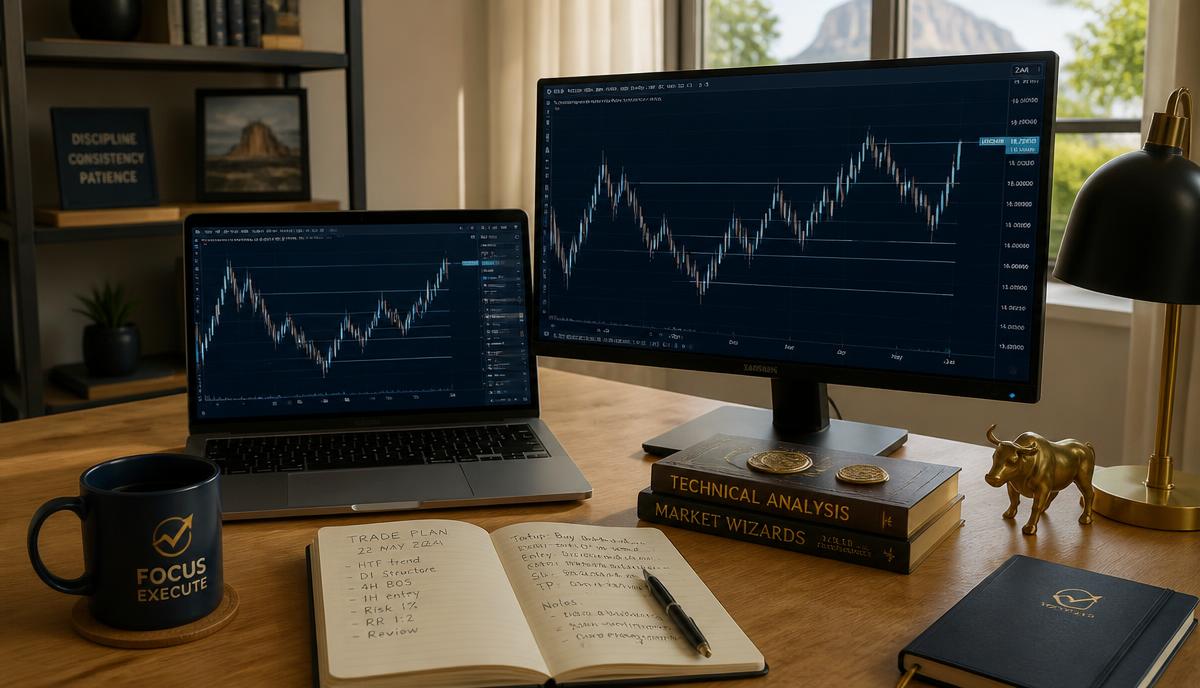
Write down why you entered, what you expected, and what actually happened. After a month of this, patterns in your own decision-making will be far more useful to you than any signal service. Most new traders who blow their first account do so because they repeat the same emotional decision without realising it.
Where Structured Learning Comes In
The five points above will keep you safer than most beginners manage on their own — but they're the floor, not the ceiling. Reading a checklist and actually building the skill to read a market, size a position correctly, and stay disciplined when a trade moves against you are two different things. That gap is exactly where a structured course earns its place.
Our Crypto Profits Mastery course was built for exactly this stage: beginners who are serious about learning to trade crypto properly, not gambling on a hunch over a long weekend. It walks through the fundamentals in this article in far more depth — asset selection, risk management, reading market structure, and building a plan you can actually follow when emotions are running high. If you're going to spend part of this weekend learning anyway, spending it with a structure behind you will get you further, faster, than spending it alone with fifteen open browser tabs.
If you want a realistic sense of how long skill-building takes, read our realistic trading learning timeline.
Your Weekend Homework
Before Monday, do three things: pick one coin and research what it actually is, decide on paper what your risk limit would be for a single trade, and watch how the price behaves over 24 hours without touching your wallet. That's it. That's the whole assignment — and it costs you nothing but time.
Trading is a skill, not a weekend hobby you either "get" or don't. Learn it properly, and the market will still be there on Monday, Tuesday, and every day after that.
Ready to build the skill properly? Explore Crypto Profits Mastery.