Can You Trade From Home? What It Actually Takes (2026 Guide)
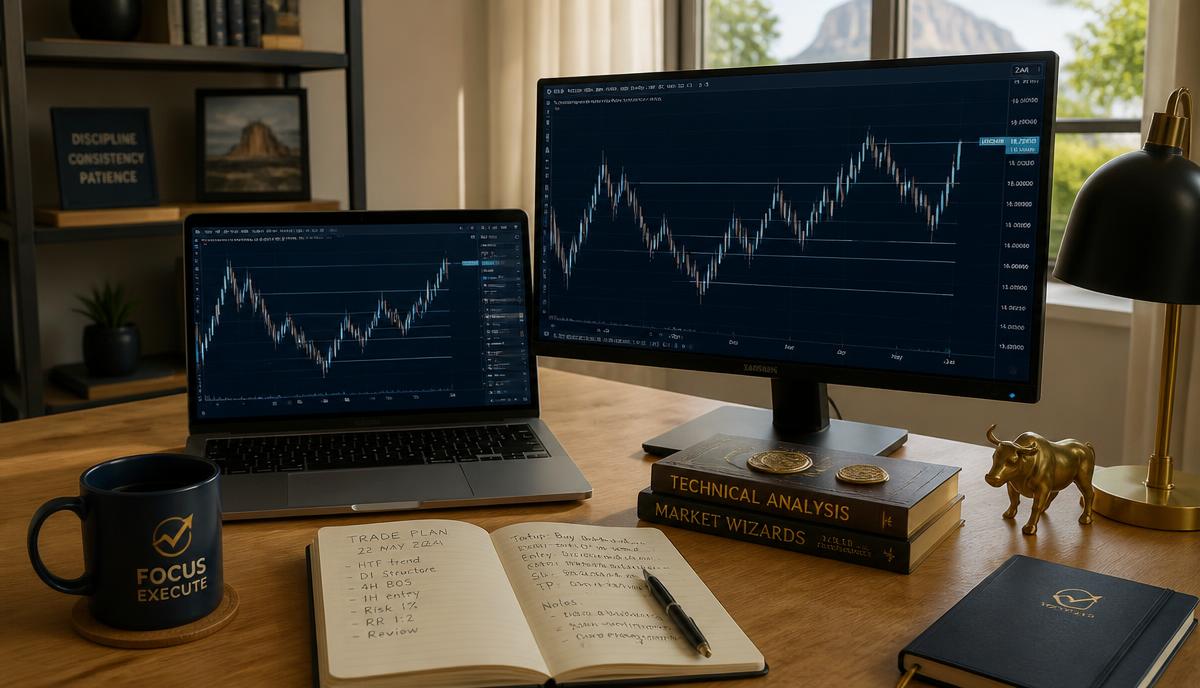
Yes — you can trade from home. That's the honest, direct answer. But it comes with a condition: you need to know how, practise properly, and attend training. Trading from home isn't a shortcut around learning. It's the same discipline as trading from anywhere else, just with your kitchen table or home office as the desk.
That distinction matters, because most of what stops people from starting has nothing to do with where they trade from, and everything to do with whether they've been shown how.
What You Actually Need to Get Started
Time isn't the real barrier people think it is. What you actually need is simpler:
- A laptop or desktop (preferable to a phone for serious screen time)
- Stable internet
- A trading account with a reputable institution that also offers education
That last point is easy to skip past, but it's the one that determines how the rest of your trading journey goes. An account on its own teaches you nothing. Pairing it with structured education is what turns "I opened an account" into "I know what I'm doing."
Before you touch a live chart, get what to look for in a trading course right — it's the difference between learning to trade and learning to guess.
What Learning to Trade From Home Actually Looks Like
At Stock Market College, home-based students work through a learner management system covering both theory and practical application. Before anyone buys a course, we run them through a quiz — Find Your Level — because a student who starts at a level too advanced or too basic for them tends to get discouraged and walk away, even after paying. A few honest questions upfront (have you traded before, how did it go, why do you think it went that way) tell us far more than a sales conversation would.
From there, it's live sessions — not recordings, not webinars. Every session is live, roughly 45 minutes to an hour and 15 minutes, most starting at 18:30. That length is deliberate: it fits around a workday, a half-day, school pickup, or a night shift. Parents, people with flexible hours, people commuting home from an office — the format is built to be attended, not just watched later and forgotten.
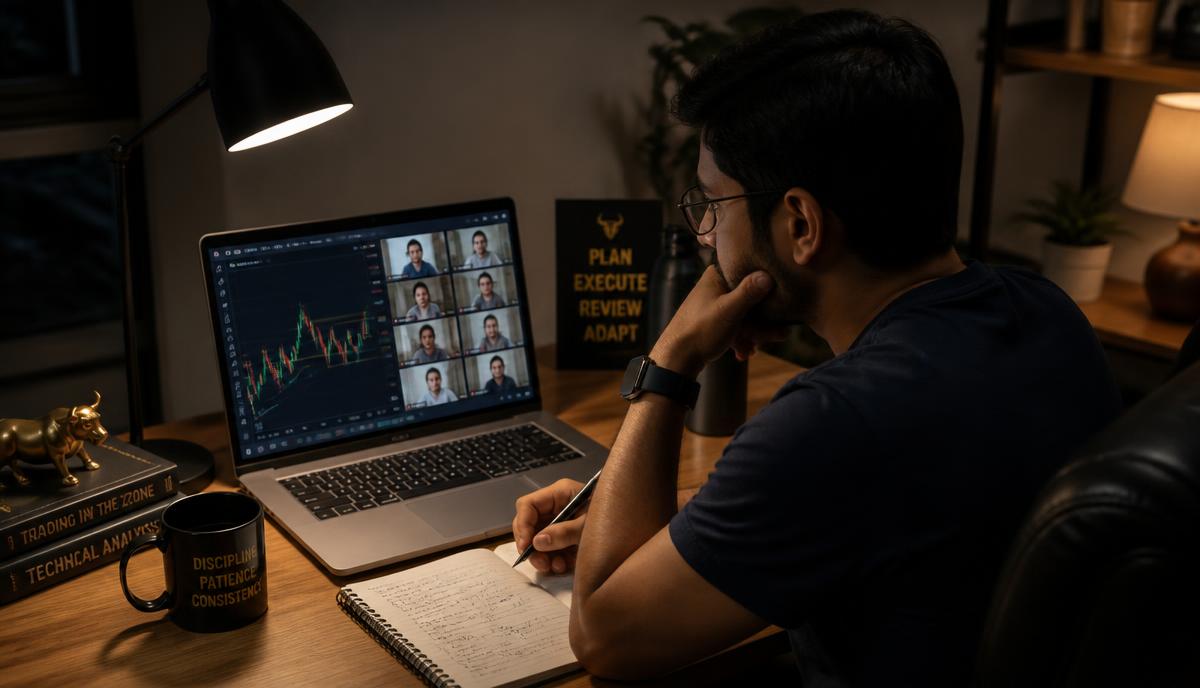
Platform training is the piece students most often try to skip, because it feels like the "boring" step before the real learning starts. That's backwards. Knowing your platform and understanding risk management before you put money in the market is what separates a trader from someone gambling with extra steps.
A real example: trading from Thailand
One of our students — a South African teacher now living in Thailand — trades successfully across both prop firm challenges and the financial markets from home. Teachers in particular tend to do well with this model: they have a natural gap in their day, and thirty minutes of focused theory, repeated consistently, adds up. It's not about finding hours you don't have. It's about protecting the half hour you do.
The Real Obstacles (And Why They're Not Reasons to Wait)
The objections we hear are almost always the same, whether someone's trading from home or anywhere else:
- "I don't have time."
- "I don't know enough."
- "I'm too scared."
- "It's really risky."
That last one is the big one, and it deserves a straight answer rather than a brush-off.
About "it's really risky"
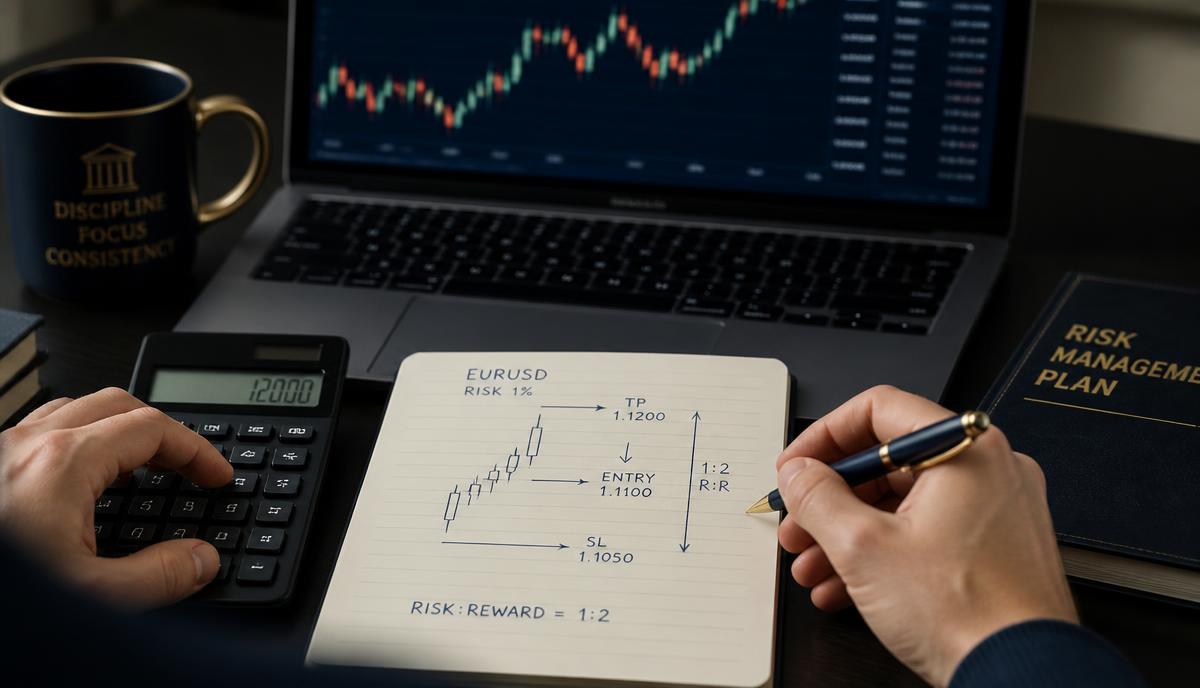
It is risky — we're not going to tell you otherwise. But risk management is taught twice a week in our live sessions, and once you understand it, it stops being the vague fear it was and becomes a process: something you do before you place a trade, not something that happens to you after. We teach a 1:2 risk-to-reward ratio as the starting discipline. That's not conservative trading and it's not reckless trading — it's a structure that reduces risk without needing to guess your way through it.
Knowledge is what actually answers fear here. If you don't know how much time trading will take you, that's not a problem to solve in advance — it resolves itself once you start applying what you're learning. You'll find your own pace.
When Trading From Home Goes Wrong
The pattern we see most with students who don't seek proper guidance: they lose money, and then blame the market instead of the gap in their own process. "This wasn't for me," they'll say. "I lost money." But the follow-up questions are usually revealing — did you do a course? Did you learn the platform? Who was teaching you? If the honest answer is "no" to most of those, the market isn't what failed. Don't be the stubborn trader who skips the how long it actually takes to learn step and then blames the outcome on trading itself.
No Promises — Just the Reality of the Markets
We're not going to tell you trading from home assures you an income, because it doesn't, and anyone who tells you otherwise is selling you something other than education. What we will tell you is this: if you know your numbers — your profit target, your stop loss, exactly what you're risking on a given trade — you're already ahead of most people who try this without structure. You'll also start to notice which instruments actually suit how you think and trade, and that only comes from doing the work, not from reading about it.
Apply your mind to it, learn, apply what you've learned, and repeat. Nobody knows everything. Ask questions. That's the whole model.
So, Can You Trade From Home?
Yes. Since 2002, more than 70,000 students have been through our process, and we currently have over 2,000 active students learning and trading this way — including from home. We update what we teach every year, and we take student feedback seriously enough to keep changing based on it.
If you're ready to find out where you'd actually start, take the Find Your Level quiz and book a discovery call. It won't tell you everything a live training session will — but it will tell you where to begin, which is usually the part people get stuck on longest.