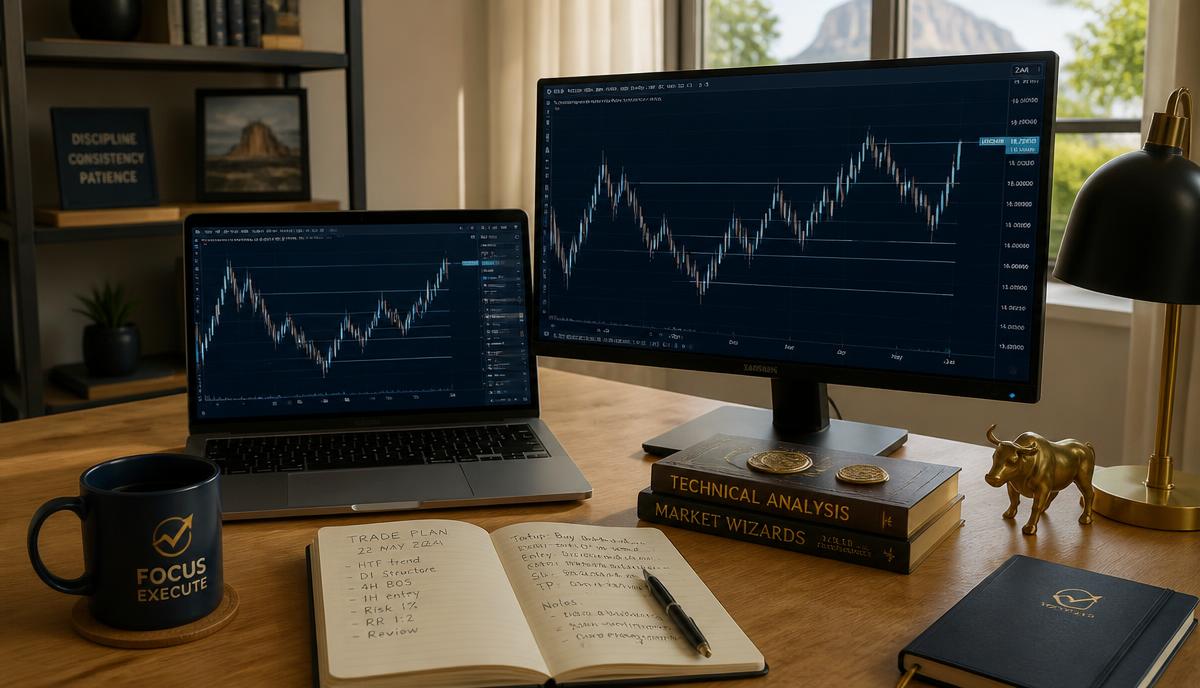
Which Trading Strategy Will Make You Money — Swing, Scalping, or Something Else?

It's one of the first questions every new trader asks: which strategy is going to make me money?
It's a fair question. But here's the truth — it's also the wrong one.
Not because strategy doesn't matter. It does. But most people asking that question are really asking something else entirely. They want to know whether they can make money quickly, and whether there's a strategy that will get them there faster.
That's where we need to start.
The Real Question Behind the Question
When students come to us at Stock Market College, the strategy question almost always has urgency underneath it. They've discovered trading, they're excited, and they want to be in the market — now.
What they haven't yet understood — and this is the most important lesson we teach — is that the strategy isn't the edge. Discipline and consistency are the edge. And those take time to develop. No strategy in the world will save a trader who hasn't built those two things first.
What Happens When Traders Chase Speed
We've watched this play out hundreds of times. A student starts out determined to scalp — jumping in and out of trades, chasing every move, riding the adrenaline. The losses come quickly. And rather than slowing down, they push harder, convinced the next trade is the one that turns it around.
Eventually something shifts. The losses force a reckoning. They slow down, they breathe, they start asking different questions. What do I actually want from trading? What kind of trader do I want to be?
That moment of reflection is where real trading begins.
The losses weren't wasted. But they didn't have to happen the way they did.
Trading Is a Recipe
After 23 years of teaching traders, here's the clearest way I can put it: trading is a recipe — either for profit, or for disaster.
The ingredients are always the same: a plan, the discipline to follow it, a record of your performance, a willingness to learn, and the consistency to apply what you've learned over and over again.
What changes the outcome isn't the strategy you choose. It's whether you follow the recipe or freestyle it.
What We Teach at Stock Market College — and Why
Our approach is built on conservative, sustainable principles. Before a student ever worries about which strategy to use, we make sure they have the following in place:
- A 1:2 risk-to-reward ratio — for every rand you risk, you target two in return
- A defined stop loss on every trade, without exception
- A clear profit target — and the discipline to take it and walk away
- A researched instrument before entering any position
- A watchlist so you're never chasing the market
These aren't exciting principles. They're not going to go viral. But they work, and they work because they're repeatable.
Why We Don't Teach Scalping to Beginners
Scalping — the strategy most new traders romanticise — is something we make students aware of. Certain instruments lend themselves to it, and it has its place. But we don't teach it as a starting point.
Scalping requires a level of skill, speed, and emotional control that takes significant experience to develop. Without that foundation, scalping doesn't accelerate your results. It accelerates your losses.
Where Swing Trading Fits In
Swing trading — holding positions over days or weeks — suits some traders very well. It allows for more considered decision-making and fits around other life commitments. But not every trader has the temperament for it, and that's perfectly fine.
The honest answer is that you'll find your fit as your experience grows. Your profits, and your losses, will guide you there.
The Strategy Isn't the Destination — You Are
There is no universal best strategy. There is only the strategy that fits your personality, your schedule, your risk tolerance, and your goals — and that you can execute with discipline, every single time.
The traders who make consistent money aren't the ones who found the perfect strategy. They're the ones who found their strategy, mastered it, and stuck to it.
That's what we help you do.
If you're ready to stop guessing and start building a real foundation, compare our trading courses and find the level that's right for you.
Swing Trading vs Scalping vs Day Trading in Practice
The labels get thrown around loosely, so here is what actually separates them day to day.
Holding Period
Scalpers hold positions for seconds to minutes. Day traders open and close inside a single session. Swing traders hold for several days to a few weeks, riding a larger move rather than a burst of volatility.
Screen Time
Scalping demands unbroken concentration for the hours you trade — no phone calls, no admin, no distractions. Day trading needs a defined block of focused hours. Swing trading can be managed with a chart review in the evening and alerts during the day, which is why it suits people who still hold a full-time job.
Emotional Load
Faster styles compress decision-making. A scalper may make thirty judgement calls before lunch, and each one is a chance to break a rule. Swing traders make fewer decisions, but must tolerate holding through drawdown overnight and over weekends.
Costs
Frequency multiplies spread and commission. A scalper pays those costs dozens of times a day, so the strategy only works with tight spreads and a genuine edge. Swing traders pay them rarely, but may carry overnight financing on leveraged positions.
Choosing a Style Around a South African Schedule
If you are trading from South Africa, the London session opens mid-morning and overlaps New York in the afternoon — the most active window of the day. If you can sit down for that overlap, an intraday style is workable. If you cannot, swing trading on the daily and four-hour charts is the honest choice, and it is a better one than forcing quick trades in dead market hours.
Choose the style your calendar can support, not the one that looks most exciting on social media.
How to Test Which Style Suits You
Run one style at a time for at least thirty trades, journalling every entry, exit and reason. Then read the journal, not the balance. Look for where you broke your own rules, and how you felt when you did it. The style you can execute cleanly when you are tired, bored or behind on the month is the style that fits you.
Frequently Asked Questions
Is scalping more profitable than swing trading?
No. Profitability comes from edge, risk control and consistency, not from how often you trade. Higher frequency simply produces results — good or bad — faster.
Can I swing trade with a full-time job?
Yes. Swing trading is the most job-compatible style, because entries can be planned in advance and managed with orders and alerts rather than constant screen time.
Should a beginner start with day trading?
Most beginners are better served by slower timeframes while they build discipline, a written plan and a trading journal. Speed can come later, once the process is proven.